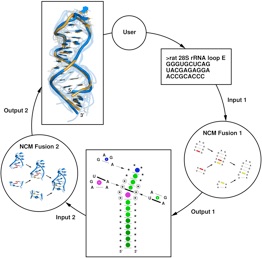
RNA 3D structure from sequence
Predicting RNA secondary and tertiary structure from sequence, with nucleotide cyclic motifs and non-canonical base pairs, and relating RNA dynamics to function.
RNA Engineering Lab · Institute for Research in Immunology and Cancer (IRIC) · Université de Montréal · Department of Computer Science and Operations Research
RNA sequence encodes more than pairing potential; it encodes mechanical properties that determine how a duplex behaves under protein constraint.
— Major F, Nat Struct Mol Biol 2026
We model how RNA structure shapes gene regulation. Our two-layer model of post-transcriptional interactomes separates RIMaps (RNA-interaction maps), which record every plausible interaction between an RNA-binding protein and the human transcripts — position, duplex structure, free energy, dissociation constant, target accessibility and conservation — from RINets (RNA-interaction networks), which infer the messenger ribonucleoprotein assemblies present in a given cell state from expression data and equilibrium binding.
RIMap-RISC, the first RIMap, covers microRNA-loaded RISC across the human transcriptome. Instead of requiring a perfect seed, it asks for an anchor — at least four consecutive base pairs in the seed (g2–g8) or supplementary (g13–g17) region — and predicts the whole duplex structure within a biophysical model of RISC, capturing non-canonical and dynamic interactions. Structure also decides what Argonaute does with a duplex: cleavage happens only when the duplex can be deformed into the catalytic geometry.
Source: Genome Biol 2026 · Nat Struct Mol Biol 2026
Predicting RNA secondary and tertiary structure from sequence, with nucleotide cyclic motifs and non-canonical base pairs, and relating RNA dynamics to function.
Modelling transcriptome-wide microRNA–target interactions and the regulatory networks they form, from duplex structure to cell-specific interactomes.
Designing RNA-based molecules, such as multi-target shRNAs, that block the proliferation of cancer cells.
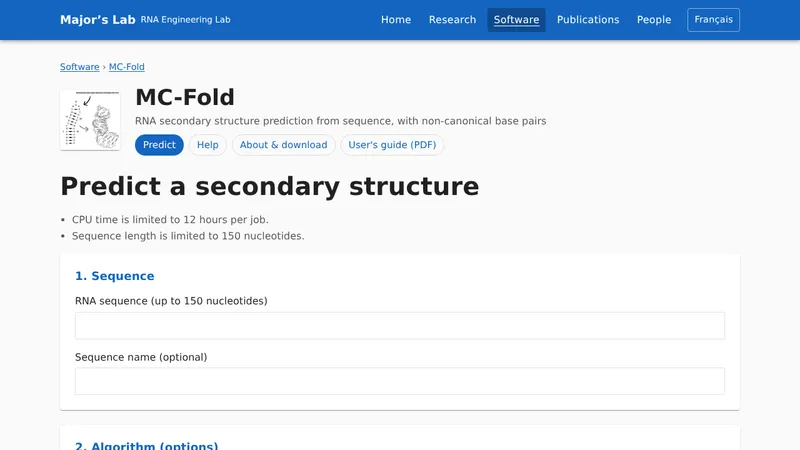
Predicts RNA secondary structure from sequence, including non-canonical base pairs, using nucleotide cyclic motifs.
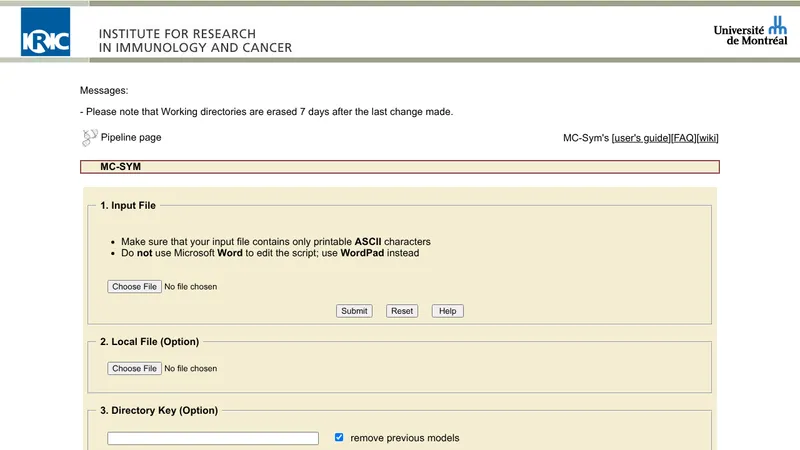
Builds RNA 3D structures from secondary structures and nucleotide cyclic motifs.
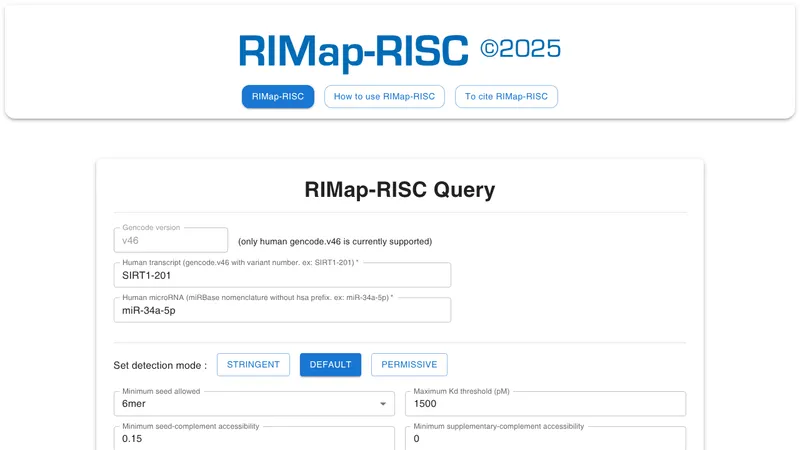
Transcriptome-wide database of structurally modelled human microRNA interactions, with a web interface and a REST API.
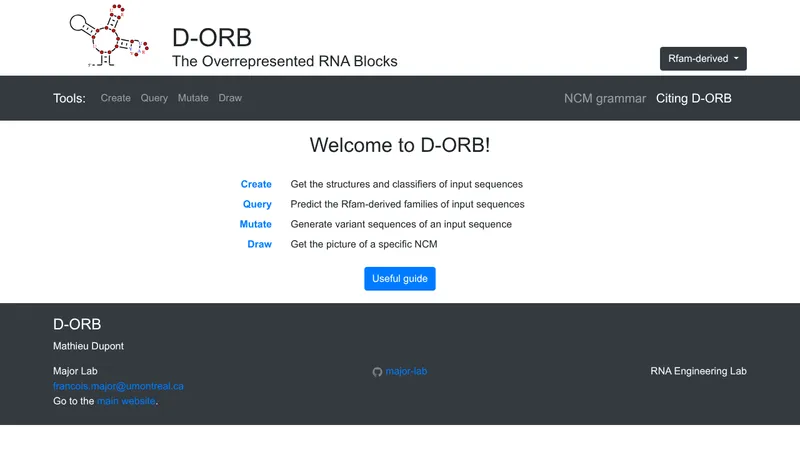
The Overrepresented Operational RNA Blocks: motifs overrepresented in the dynamic landscapes of RNA families.
He and welcome to Dr. Francois Major’s laboratory at the Institute for Research in Immunology and Cancer, and Computer Science Department, University of Montreal.
Note: If you are looking for the Supplemental Information of our publications, go to Publications.
In this lab in the long-terms, we want to understand and characterize human gene regulatory networks; link cell content to phenotypes; and, design and create artificial molecular components to peek and poke cell information and programmes.
We are developing a suite of programs to analyze, model, predict, and determine RNA 2D and 3D structure. You can access and download our software through the MC-Tools page. You can also access Web services of most of our programs through the MC-Pipeline page.